- PITSTOP
- Posts
- How to Drive a Car Upside Down:
How to Drive a Car Upside Down:
Aerodynamics of a F1 car explained

TeamKART
28 Oct
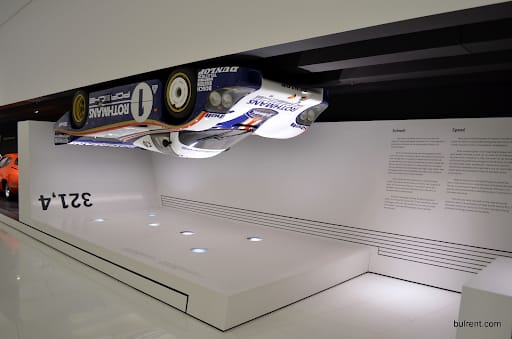
Driving a car upside down might sound like something from a sci-fi movie and the closest anyone can witness it, is in the Porsche Museum, where the Porsche 956 is mounted upside down to signify the large downforce generated by the car which started the argument of driving a car upside down. In the modern era of motorsports, the incredible aerodynamics of the modern Formula 1 cars make inverted driving a theoretical possibility. Let's dive into F1 aerodynamics, exploring its origins, the key components involved, and how these engineering marvels can produce enough downforce to defy gravity.

The Origins of Aerodynamics in F1
The use of aerodynamics in Formula 1 can be traced back to the 1960s when engineers realised the potential benefits of controlling airflow around the car. Initially, the focus was on reducing drag to achieve higher speeds, but it quickly became apparent that manipulating air could also improve grip and handling. This was especially evident in cornering where aerodynamic devices were incorporated for better traction which, in turn, improved the downforce and thus, the vehicle's performance.
In the late 1960s, teams like Lotus began experimenting with aerodynamic wings to create downforce, which presses the car into the track, allowing for faster cornering speeds. This marked the beginning of a new era in motorsport, where aerodynamic innovation became as important as engine power.
Teams nowadays have progressed a lot in this field; not only wing, but we are also now in the era of side skirts, diffusers, spoilers, and more.
Key Aerodynamic Parts of F1 Cars
To understand how F1 cars generate downforce, we need to look at the various aerodynamic components and terms that play a crucial role in shaping airflow:
1. Front Wing
The front wing is the first point of contact with the air and is crucial for directing airflow around the car. Its primary function is to generate downforce on the front axle, improving turn-in and stability.

2. Rear Wing
The rear wing provides significant downforce to the rear axle, enhancing traction and stability, especially in high-speed corners. Its design is critical for balancing the car and managing drag.

3. Diffuser
Underbody diffusers are particularly efficient, contributing up to 50% of the car's downforce without significant drag. Located at the rear underside of the car, the diffuser helps accelerate the airflow beneath the car, increasing downforce through a low-pressure area. It plays a vital role, in utilising the ground effect.

4. Sidepods and Bargeboards
These components manage airflow around the car's sides, reducing turbulence and optimising cooling for the engine and brakes.

Downforce
A concept from the 1970s, the ground effect involves using the car's floor to create downforce. Modern F1 cars utilise the venturi tunnel effect which reduces the area between the floor and the track, thus speeding up the airflow within, creating a higher pressure differential, as backed by Bernoulli’s principle. This pressure difference is essentially downforce which “pulls” the car towards the ground, providing better traction and stability, but at times the vehicle is required to lose traction for high-speed maneuvers or overtakes, for which the DRS system was developed which is a part of the rear wing which reduces aerodynamic drag on demand by opening the adjustable part essentially reducing downforce granting extra acceleration
Driving Upside Down
Downforce is the key to the theoretical ability of an F1 car to drive upside down. Here's how it works:
1. Creating More Downforce Than Weight
For a car to drive upside down, it must generate more downforce than its weight. If we observe an F1 car on the track, we notice that the tyre grip depends on the generated downforce plus the car’s weight. However, driving the car upside down changes things significantly. The force of the car’s mass would act in the opposite direction which means the force that ‘pushes’ the tyres towards the ceiling is equal to the downforce generated by the car minus the weight of it. F1 cars are designed to generate over 5,000 pounds of downforce at high speeds, meaning they can theoretically stick to the ceiling of a tunnel if travelling fast enough. This is due to the complex interplay of the car's aerodynamic components, which create significant downward force.
2. Speed and Downforce
F1 cars can produce over 5 Gs of downforce, meaning the aerodynamic forces pressing the car to the ground are more than five times its weight. This incredible downforce is achieved at high speeds, typically over 150 mph (241 km/h). At these speeds, the car's wings and underbody work in harmony to create a powerful vacuum effect that effectively "glues" the car to the track. This level of downforce allows F1 cars to corner at astonishing speeds, with lateral forces often exceeding 4 Gs in some of the fastest corners on the calendar.
3. Upside-Down Driving
Theoretically, if an F1 car were to enter a loop or drive along the ceiling of a tunnel, the downforce could keep it adhered to the surface. The car's wings and underbody would continue to generate the necessary aerodynamic forces to counteract gravity, allowing it to "stick" to the ceiling. This concept is not just a theoretical exercise; it highlights the extreme capabilities of modern F1 aerodynamics.
4. Technical Challenges
Achieving and maintaining the levels of downforce required for such feats involves overcoming significant technical challenges. We will need to engineer a car that can produce a much higher downforce to overcome the weight of the car and at the same time provide enough grip to maintain a constant speed upside down. Followed by the track design and building which is estimated to have costs similar to building 7 full sized stadiums, the geometry, strength and areas of low drag trim are the major considerations
Also, a major consideration would be the IC engine which isn’t fabricated to run upside down. That must be tailored to meet the requirements of power transmission while driving upside down. Next, the suspension, steering and braking systems need to be modified to be adequate for the curve of the tunnelled track. Engineers must design components that can withstand the immense forces involved while maintaining structural integrity and performance. This requires a delicate balance between aerodynamic efficiency and mechanical reliability, pushing the boundaries of engineering and material science.
After all major considerations and modifications of the car, the next step is to do multiple tests followed by data analysis of those tests, changes and preparation of the car as well as the driver, and any modification required to the track.
After overcoming all these challenges we will be ready to have the first attempts at inverting our aerodynamic engineering marvel.

Conclusion
While driving an F1 car upside down remains a theoretical concept, the fact that it's even possible highlights the incredible advancements in aerodynamics within the sport. From the early days of simple wings to the sophisticated designs of today, aerodynamics continues to be a crucial element in the quest for speed and performance in Formula 1.
The next time you watch an F1 race, remember that you're witnessing not just a battle of drivers, but a showcase of cutting-edge engineering that pushes the boundaries of what's possible in motorsport. Who knows? Maybe one day we'll see a race that takes place upside down!
p.s. We are happy to announce that we are starting a new interview series with India’s best motorsport drivers across fields like Rally racing and F3, F4. Stay connected on our YouTube Channel to see the exclusive interview https://www.youtube.com/@teamkart3652
Reply